
Every set cycle, it happens.
New product gets announced.
Influencers open early.
Chase cards start trending.
Preorders spike.
Prices climb.
Everyone panics.
And suddenly people are paying absurd premiums for products that will be widely available two weeks later.
Let’s talk about it.
Release Hype Is a Temporary Drug
The first two weeks of any Pokémon TCG set are chaos.
Supply hasn’t stabilized.
Pull rates aren’t fully understood.
Everyone wants to be first.
“First to pull it.”
“First to grade it.”
“First to flex it.”
That urgency is artificial scarcity.
And artificial scarcity is expensive.
Exhibit A: Phantasmal Flames
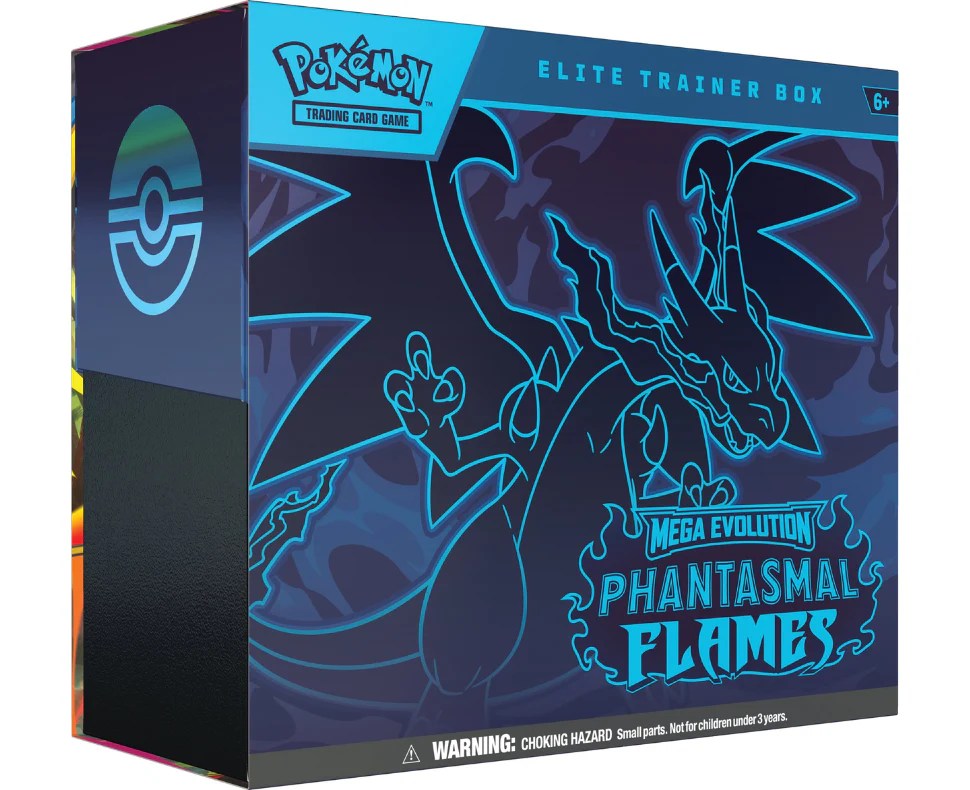
When the Phantasmal Flames UPC dropped, people were paying $315.
Three hundred. Fifteen. Dollars.
Now?
It’s sitting around $130 plus taxes on the secondary market.
That’s not a small correction.
That’s a crater.
Meanwhile, Walmart has had booster bundles and ETBs hovering near MSRP for months, on and off. Product wasn’t rare. It was early.
There’s a difference.
If you paid $315 at drop because you “had to have it,” you essentially donated $180+ to impatience.
That’s not investing.
That’s adrenaline shopping.
And Let’s Talk About Singles, Too
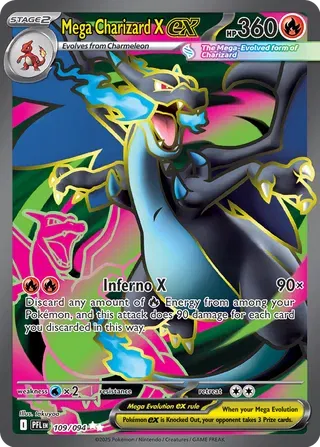
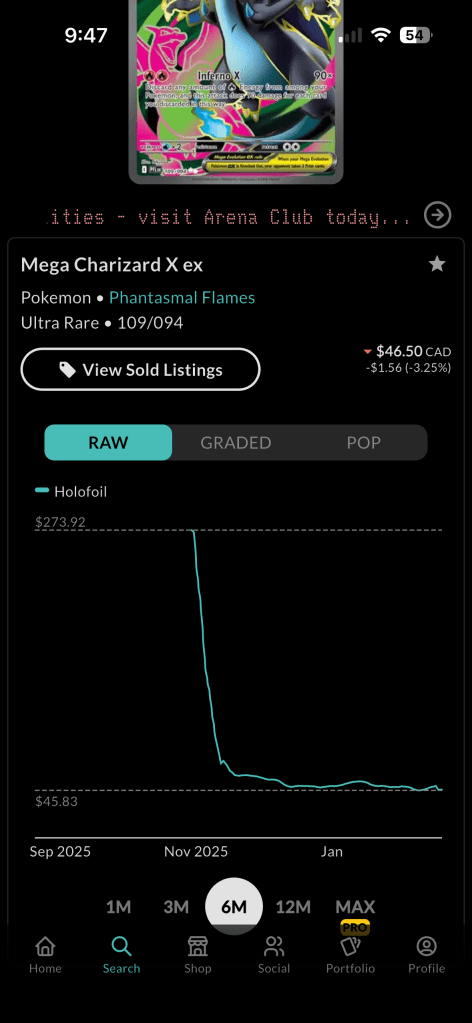
It wasn’t just sealed product that cratered after Phantasmal Flames.
Singles dropped hard.
Many of the early chase cards were selling at peak-weekend insanity pricing — and within a couple of months, they were down 40–60% once supply flooded the market.
That’s not a minor dip. That’s a correction.
What happened?
- Mass openings increased raw supply
- Graded submissions came back
- Competitive hype cooled
- Sellers undercut each other
Early buyers paid for momentum.
Patient buyers paid for reality.
This is the part people forget in release week chaos: modern sets are opened aggressively.
When content creators rip cases.
When collectors chase master sets.
When players hunt playsets.
Supply ramps up fast.
The first wave of singles is always the most expensive because it’s the smallest supply window.
If you’re buying singles in the first two weeks, you are buying at the highest emotional temperature of the market.
That rarely works out.
The Poké Pad Situation (Please. Stop.)
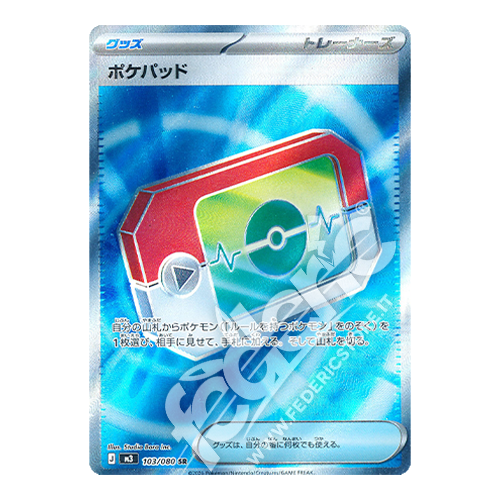
For the love of all things holofoil:
Stop paying $15 for Poké Pads.
They aren’t even legal for two weeks.
You’re paying inflated pre-legal hype pricing for a card that:
- Hasn’t entered competitive play yet
- Has unknown meta impact (though everyone will probably need it)
- Will settle once actual usage data comes in
And to make it even wilder?
Perfect Order will include a full art Poké Pad.
So you’re overpaying for early access to a card that is about to get a premium variant in the next set.
Make it make sense.
Remember Lillie?
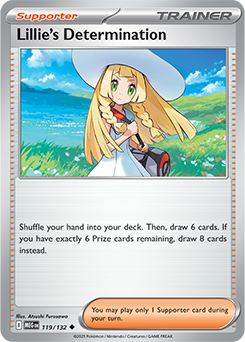
At peak hype, Lillie cards were going for insane numbers. $30 CND for four on ebay.
Now?
They’re everywhere, I give them away for free to players. But you can also get them for like a buck.
Reprints. Collections. Market stabilization.
The pattern repeats every cycle:
Hype spike → scarcity illusion → mass opening → price correction.
It’s predictable.
Yet every release, people act like this one is different.
It rarely is.
Why Prices Spike at Drop
Let’s be clear — there are reasons this happens:
- Content creators open product early
- Graders rush submissions
- Flippers exploit FOMO
- Competitive players want immediate access
- Collectors fear missing out
It’s a perfect storm.
But here’s what matters:
Pokémon prints heavily.
Modern sets are not 1999 Base Set.
They are not limited Japanese promos.
They are not one-run collector pieces.
Most modern chase cards stabilize.
Most sealed product retraces.
Most “must-buy-now” panic ages poorly.
The Math of Patience
If you wait 2–8 weeks:
- Supply increases
- Pull rate data spreads
- Hype cools
- Competitive viability becomes clearer
- Retail restocks happen
Prices normalize.
Not always dramatically. But usually enough to matter.
If you’re buying to play — singles are cheaper after the flood.
If you’re buying to collect — sealed stabilizes.
If you’re buying because you’re excited — that’s valid. Just don’t confuse excitement with scarcity. I get if you are player going to a tournament. But even then again, pokepad isn’t legal for 2 weeks. The vast majority of people do not need it this second.
My Personal Rule for Ascended Heroes
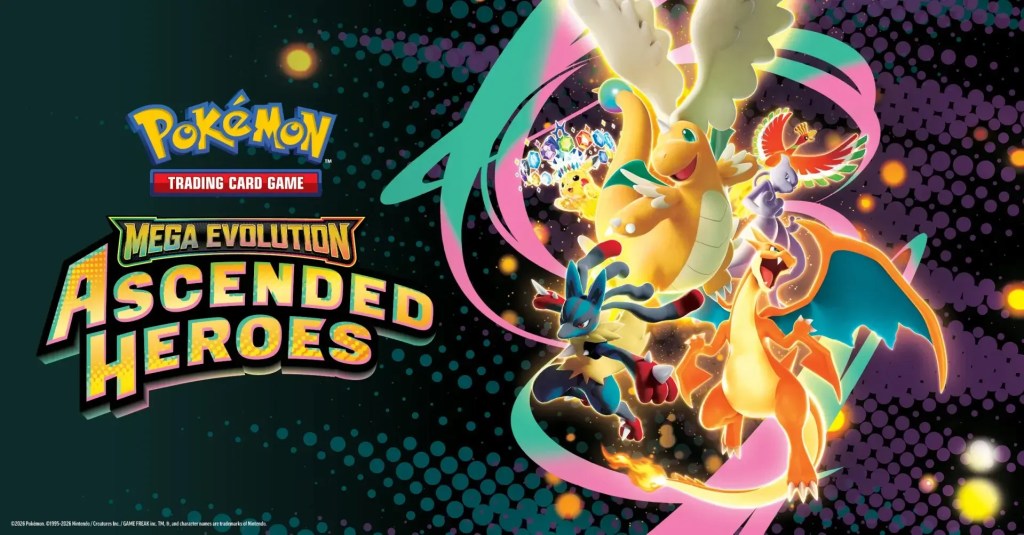
For Ascended Heroes?
I won’t even be looking at singles seriously until June.
Why June?
Because by then:
- Booster bundles will have been out for at least a month
- Retail restocks will have cycled
- Pull rates will be widely documented
- The hype spike will have cooled and everyone will be excited for the 30th anniversary set which we will either know about by then, or will know about real soon.
That’s when you see the real market settle.
Not day three.
Not week one.
Not “but what if it spikes.”
After product saturation.
Booster bundles are especially important in the timeline. They quietly increase volume in a way people underestimate. Once those hit circulation consistently, singles supply expands again — and prices soften.
Waiting isn’t missing out.
It’s letting the market breathe.
Who Benefits From Overpaying?
Not you.
Not your binder.
Not your future budget.
The only people who benefit from over-market drop pricing are:
- Scalpers
- Panic sellers who exit quickly
- Local Shops
- Collectors who rip and flip because they know the cycle and will buy that card back later for super cheap
Everyone else absorbs the correction.
A Better Strategy
Here’s a calmer approach:
- Buy one product at release if you want the experience.
- Wait for singles to settle.
- Track market trends instead of reacting emotionally.
- Budget for the set as a whole, not the first weekend.
Let hype be entertainment — not instruction.
You do not need to be first to enjoy a set.
You do not need to overpay to be a “real” collector.
You do not need to panic because someone on YouTube pulled a chase on day one.
Pokémon will restock.
The market will correct.
The hype will cool.
It always does.
Be patient.
Your wallet — and your future binder — will thank you.
This isn’t vintage.
This isn’t limited-run promo territory.
This is mass-distribution modern TCG.
If a single looks “scarce” at release, that’s usually because not enough has been opened yet — not because it won’t be.
There are exceptions. There always are.
But betting on exceptions instead of patterns is expensive.
If you want to open packs at release for fun? Do it. That’s part of the hobby.
If you want specific singles?
Wait.
Let the wave hit.
Let the mass openings happen.
Let undercutting begin.
Let the adrenaline settle.
Then buy.
Because the difference between week one pricing and month three pricing can literally fund your next ETB.
And that’s not anti-hype.
That’s just math.


 Pixels and cocoa
Leave a comment