
There’s a certain comfort in returning to your favorite Pokémon. Not because they’re the strongest, the rarest, or the most meta-relevant — but because they feel familiar. Safe. Like emotional support creatures that have quietly followed you through different stages of life.
I grew up playing the video games. From the early Game Boy days onward, Pokémon has always been a steady thread in my life. It was joy in its simplest form — exploration, collecting, evolving, building a team that felt like mine. Through school, through adulthood, through all the changes life brings, the games never stopped being that spark of comfort. Even now, well into my 40s, booting up a Pokémon game still feels like childhood.
What surprises me most is that the joy never aged out.
If anything, it deepened.
And then, in my 40s, I discovered the Trading Card Game.
I didn’t grow up playing the TCG. I was aware of it, of course — the cards were everywhere — but I never dove in. And when I finally did? Oh. The part of me that loves collecting, organizing, storytelling, and strategy lit up immediately.
There’s a tiny part of me that wishes I’d started as a kid.
But there’s also something special about discovering it now — bringing adult patience, perspective, and appreciation into something that once would have just been shiny cardboard. The TCG didn’t replace the games. It expanded the universe. It gave me another way to connect, to build, to find calm.
These are the Pokémon I always come back to. Not just as cards or characters, but as little anchors of calm in a noisy world.
They’ve followed me from childhood cartridges to carefully organized binders. From pixel sprites to textured foil. From simple joy to layered meaning.
Eevee & Leafeon — Gentle Growth, On Your Own Terms
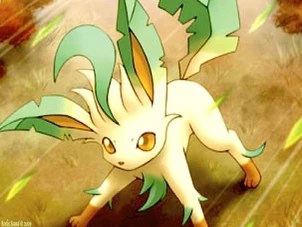
If my Pokémon preferences had a thesis statement, it would probably be Eevee.
Eevee is possibility without pressure. It doesn’t rush you. It doesn’t demand optimization. It simply exists until you’re ready to choose a path—or not choose one at all. There’s something deeply cozy about that.
Leafeon, in particular, feels like the embodiment of quiet healing. It’s nature-coded calm. Soft strength. Growth that happens slowly, intentionally, and without spectacle. Leafeon doesn’t need to be loud to be powerful—it just endures, thrives, and protects.
I’ve started to realize that this isn’t just aesthetic preference. It’s autobiographical.
I’ve lived with chronic medical issues for most of my life. My energy has always been something I’ve had to ration. My progress has rarely looked dramatic. I don’t get the luxury of sprinting. I’ve had to learn pacing, recovery, and the uncomfortable art of stopping before I want to.
When your body has limits, “growth” looks different.
It looks like choosing rest without guilt.
It looks like celebrating stability.
It looks like measuring success in maintenance instead of milestones.
And suddenly Leafeon makes even more sense.
Leafeon doesn’t dominate the battlefield. It sustains. It absorbs sunlight. It restores. Its power is regenerative, not explosive. It thrives in balance. It protects quietly.
That feels familiar.
Maybe I was always drawn to healing-coded Pokémon because I needed reminders that healing is strength. That softness is not weakness. That steady endurance counts.
Eevee’s branching evolutions also feel symbolic in a different way. When you live with health challenges, your life path rarely unfolds the way you originally planned. You adapt. You evolve differently than expected. Not worse. Just differently.
Eevee embodies that. There isn’t one “correct” outcome. There are many valid forms.
And Leafeon? Leafeon is the version that says:
You can grow without burning yourself out.
You can be powerful without being loud.
You can thrive gently.
That energy resonates with me more than I can fully articulate.
Gentle progress.
Rest as part of growth.
Choosing peace over performance.
Bulbasaur — My First Comfort Pokémon
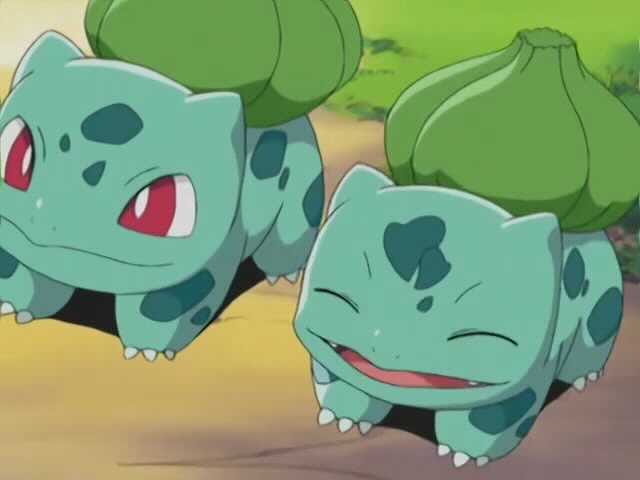
Bulbasaur was one of my first favorites growing up, and honestly? That never changed.
The Gen 1 starters matter to me because they were there at the beginning — when Pokémon felt magical, simple, and safe. Before optimization. Before meta discussions. Before knowing what “viable” even meant. It was just picking a partner and stepping into tall grass.
Bulbasaur felt different from the other two. Not louder like Charmander. Not as coolly defiant as Squirtle. Bulbasaur felt… grounded. Calm. Present.
It didn’t need to prove anything.
Looking back, that makes sense.
Bulbasaur embodies balance. It’s both Grass and Poison — growth and defense existing at the same time. It doesn’t rush to evolve. It builds. It absorbs sunlight. It stores energy. It plays the long game.
And if I’m being honest, that might be why it felt like comfort to me.
As a kid — and later as an adult navigating chronic health issues — the idea of steady resilience mattered more than explosive strength. I’ve never been the sprint-first type. I’ve had to be strategic with my energy. Thoughtful. Sustainable.
Bulbasaur is sustainable.
It doesn’t burn out. It doesn’t overextend. It roots itself and grows from there.
There’s something deeply reassuring about a Pokémon whose strength comes from patience. From sunlight. From slow accumulation instead of spectacle.
When I look at Bulbasaur now, I don’t just see nostalgia. I see a quiet blueprint I didn’t even know I was drawn to:
You don’t have to be the loudest to matter.
You don’t have to be the strongest to endure.
You don’t have to rush growth for it to count.
Bulbasaur was my first comfort Pokémon. Not because it was flashy — but because it felt safe.
And sometimes, especially when your body or your life feels unpredictable, “safe” is the most powerful trait of all.
Psyduck — A Reminder to Be Kind to Myself
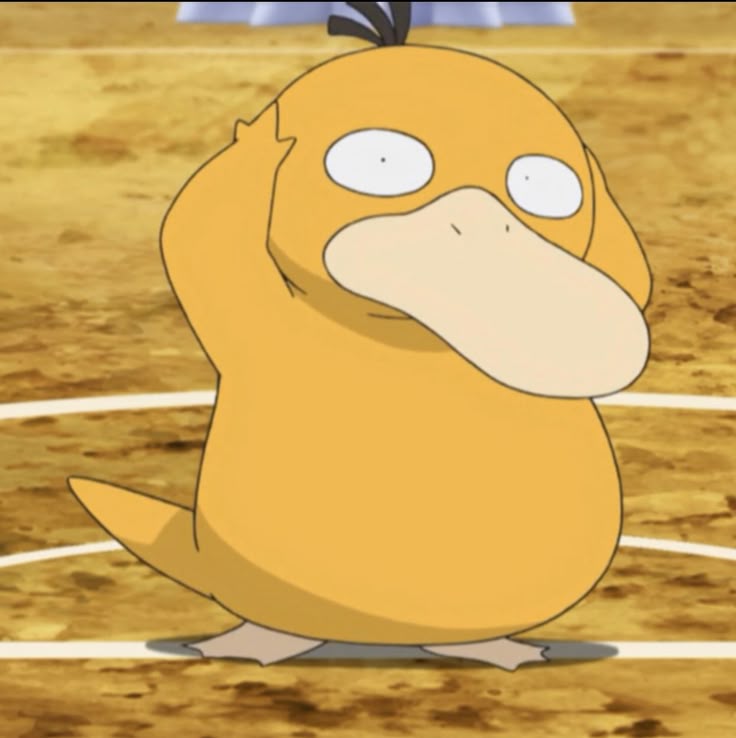
Psyduck hits a little closer to home.
It’s overwhelmed. It’s overstimulated. It tries its best and still struggles — and yet, it’s allowed to exist exactly as it is. Psyduck doesn’t need to “fix” itself to be worthy.
For most of its Pokédex entries, Psyduck is described as constantly battling headaches. When the pain builds too much, it releases a burst of psychic power. Not because it planned to. Not because it trained for it. Because it had to.
There’s something uncomfortably relatable about that.
As someone who deals with anxiety, I know what it feels like to have a nervous system that runs hot. To be overstimulated by noise, pressure, expectation. To look calm on the outside while your brain feels like it has twenty tabs open and all of them are playing music.
Psyduck walks around holding its head like it’s trying to contain the noise.
Same.
But here’s the part that matters: Psyduck is never portrayed as broken.
It’s confused. It’s flustered. It’s chronically overwhelmed. But it’s still lovable. Still chosen. Still part of the team.
No one tells Psyduck it has to evolve immediately to be acceptable. No one says it has to suppress its nature to deserve belonging. It just… exists. And when the pressure spikes, it survives it the only way it can.
That feels like permission.
Permission to have bad brain days.
Permission to rest before the migraine hits.
Permission to admit when I’m overstimulated instead of pretending I’m fine.
Psyduck is cozy chaos, yes — but it’s also self-compassion wrapped in a very confused duck.
It reminds me that struggling doesn’t cancel out strength. That sometimes power shows up after the breakdown, not before it. That being overwhelmed doesn’t make you incompetent — it makes you human.
And maybe the most important lesson Psyduck quietly offers is this:
You are allowed to be a work in progress and still be worthy of care.
Even on the loud days.
Even on the exhausted days.
Even on the “why is my brain like this?” days.
Especially on those days.
Psyduck is cozy chaos, yes—but it’s also self-compassion wrapped in a very confused duck.
Charmander — Growing Up With Hope

Charmander was another Gen 1 favorite, and I think that’s pure nostalgia talking — in the best way.
There’s something about that tiny flame on its tail that always felt bigger than it looked. Fragile, but determined. Vulnerable, but persistent. It burns no matter what — and if it goes out, so does Charmander.
As a kid, that felt dramatic and exciting.
As an adult, it feels symbolic.
Charmander reminds me of growing up — of wanting to be brave before you fully know how. Of trying to act strong while you’re still learning what strength even means. There’s this earnestness to Charmander. It doesn’t posture. It doesn’t intimidate. It just tries.
And it keeps trying.
In the anime, there’s that scene where Charmander waits in the rain, flame flickering, still believing its trainer will come back. That scene wrecked me as a kid. It still does. Not because it’s tragic — but because it’s about hope that refuses to extinguish itself.
Charmander is hope that needs protecting.
It’s the part of you that keeps showing up even when you’re unsure. The part that believes growth is possible, even if you’re not there yet. The part that says, “I’m small now, but I won’t always be.”
Growing up is a lot like that.
You start as potential. You carry a little spark of who you might become. And life throws wind, rain, doubt, illness, setbacks — all of it. Sometimes the flame flickers. Sometimes you panic and cup your hands around it just to keep it alive.
But you keep going.
Charmander evolves into Charmeleon, then Charizard — power, confidence, fire that fills the sky. But what makes that evolution meaningful is where it started: a small creature with a flame that needed care.
That’s the comforting part.
You’re allowed to be small and still be becoming.
You’re allowed to need protection while you’re learning to be strong.
You’re allowed to grow at your own pace without the flame going out.
Charmander isn’t just nostalgia.
It’s a reminder that hope doesn’t have to be massive to matter.
It just has to keep burning.
Pikachu — Joy That Never Left
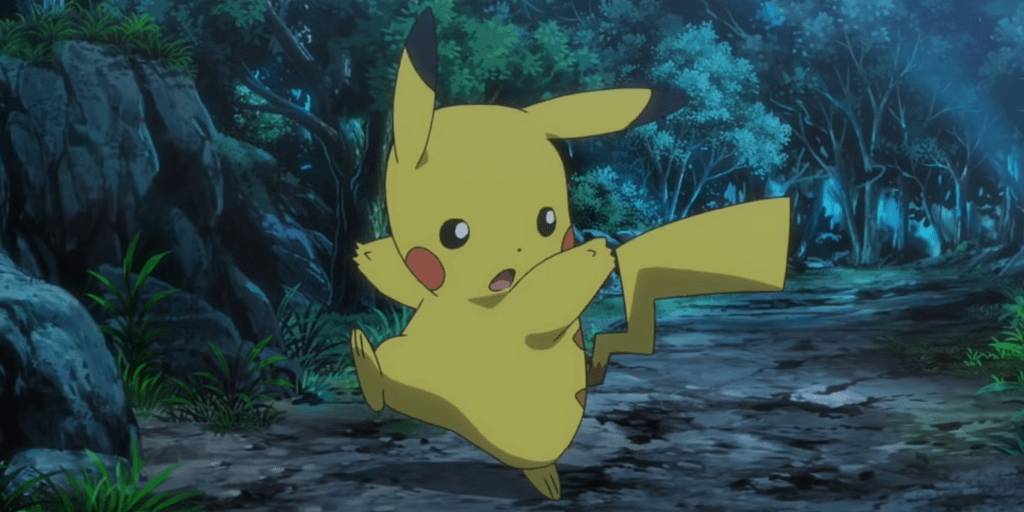
Pikachu represents joy without complication.
It’s the opening notes of the anime theme echoing through a living room after school. It’s sitting too close to the TV. It’s knowing the words before you even realize you memorized them. Pikachu isn’t just a mascot — it’s a memory trigger.
It’s childhood excitement in bright yellow form.
There’s something grounding about that. In a world that constantly asks you to analyze, optimize, and justify your preferences, Pikachu doesn’t require explanation. It’s just happy. It just exists. It smiles. It sparks. It cheers.
And that’s enough.
Pikachu never feels heavy. It doesn’t carry existential lore. It doesn’t symbolize shadow work or endurance or survival strategies. It’s not a metaphor for pacing yourself or managing overwhelm.
It’s just joy.
And honestly? That might be the most powerful thing of all.
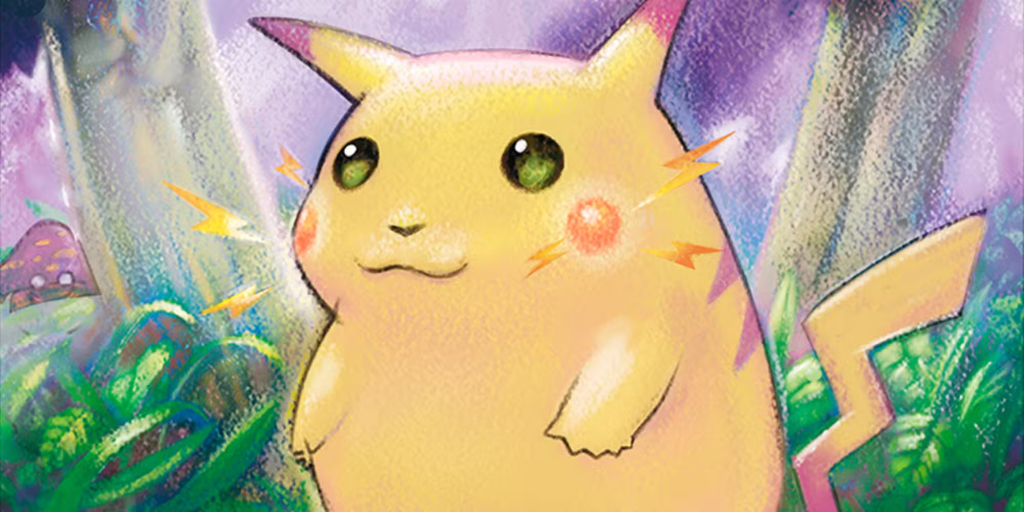
When you’ve spent years navigating health challenges, anxiety, growth, responsibility — you start to deeply value things that are uncomplicated. Not shallow. Not trivial. Just uncomplicated.
Pikachu doesn’t demand emotional processing.
It doesn’t require you to decode it.
It just makes you smile.
There’s something incredibly cozy about that kind of consistency. Pikachu has been there through every era — games, anime, cards, cultural waves. It never becomes outdated. It never becomes ironic. It just remains.
Bright.
Familiar.
Safe.
And maybe that’s why it still matters.
Because sometimes healing isn’t found in symbolism or introspection. Sometimes it’s found in letting yourself enjoy something without needing it to mean more.
Not everything has to be deep to be important.
Some favorites stay favorites because they’re tied to laughter. To comfort. To the simple thrill of seeing something you love pop up on a screen or a card and thinking, “Oh. It’s you.”
Pikachu is joy that never left.
And sometimes, cozy is just that — returning to the feeling of being small, excited, and completely unselfconscious about what you love.
No explanation required.
Why These Pokémon Matter to Me
These Pokémon aren’t just characters to me — they’re emotional touchstones.
They’re markers in a timeline.
When I look at them, I don’t just see stats or typings or card art. I see phases of my life. I see the kid who needed comfort. The teenager who needed escape. The adult who needed pacing, resilience, and gentleness more than productivity.
They remind me where I started — sitting cross-legged in front of a screen, completely absorbed in a world that felt safe and structured. Back when choosing a starter felt like the biggest decision in the universe, and that kind of simplicity was enough.
They also remind me how I’ve grown.
Bulbasaur taught me sustainability before I had the language for it.
Charmander showed me that fragile hope still counts.
Eevee and Leafeon reflect the life I’ve had to build — adaptable, intentional, rooted in slow healing.
Psyduck gives me permission to laugh at my overwhelmed brain instead of resenting it.
Pikachu reminds me that joy can be uncomplicated and still be profound.
Together, they form a kind of emotional ecosystem.
Nostalgia.
Resilience.
Anxiety.
Hope.
Comfort.
All the things that make cozy spaces feel safe.
And maybe that’s what Pokémon has always been for me — a contained universe where growth is possible, where evolution is earned, where rest is allowed between battles. A place where even the smallest creature can become something powerful, but doesn’t have to rush to get there.
These favorites stayed with me because they grew with me.
The reasons changed.
When I was younger, they were cool. Cute. Strong. Familiar.
Now, they feel like metaphors. Anchors. Reminders.
Reminders that it’s okay to move slowly.
That healing counts as progress.
That anxiety doesn’t cancel out worth.
That hope can flicker and still survive.
That joy doesn’t need justification.
And honestly? That’s why they’ll always be my favorites.
Because sometimes, the Pokémon that mattered when you were a kid still matter — just for different reasons now.
Not because you didn’t grow up.
But because you did.

 Pixels and cocoa
Leave a comment