
When people ask whether they should play FireRed or LeafGreen, what they’re really asking is:
Is there actually a difference… or am I just choosing a dragon over a plant?
The truth?
They are nearly identical games — but the differences that do exist matter more than you might think.
Both titles are Game Boy Advance remakes of Pokémon Red and Pokémon Green (and by extension Pokémon Blue). Released in 2004, they rebuilt Kanto using the upgraded mechanics and visuals introduced in Pokémon Ruby and Pokémon Sapphire.
But which one should you actually play?
Let’s go through every meaningful difference.
Version-Exclusive Pokémon
This is the biggest distinction between the two games. Certain Pokémon can only be caught in one version unless you trade.
FireRed Exclusives
Growlithe Arcanine Scyther Elekid Ekans Oddish Shellder
LeafGreen Exclusives
Vulpix Ninetales Pinsir Magby Sandshrew Bellsprout Staryu
If you have strong feelings about Growlithe versus Vulpix, congratulations — that may already be your answer.
Story & Main Gameplay
There are no story differences between FireRed and LeafGreen.
You will:
Start in Pallet Town Choose Bulbasaur, Charmander, or Squirtle Battle through the same eight gyms Face the same rival Take down Team Rocket Challenge the same Elite Four
There are no alternate endings. No version-specific villains. No hidden route changes.
Your Kanto journey is identical.
Post-Game Content — The Sevii Islands
Both versions include the expanded Sevii Islands storyline — a major upgrade from the original Gen 1 games.
This adds:
Additional islands to explore A continuation of the Team Rocket plot Access to Johto Pokémon (after unlocking the National Dex)
Again — no differences between versions here.
Visual Identity & Vibe
This might sound minor, but it matters.
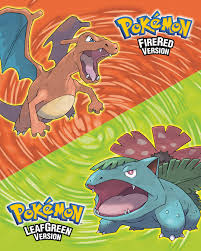
FireRed features Charizard on the cover. LeafGreen features Venusaur.
That subtle aesthetic difference shapes how the game feels.
FireRed often feels bold and aggressive.
LeafGreen feels balanced and grounded.
It’s not mechanical — it’s emotional. But Pokémon has always been emotional.
Pokédex Completion & Trading
Just like the original Gen 1 titles, you cannot complete the Pokédex in one version alone.
You will need to trade to obtain all exclusives.
This design wasn’t accidental. Pokémon has always encouraged community interaction. In 2004, that meant link cables. Today, it means choosing your version carefully if you’re playing solo. Pokemon has also announced that there will be no online play for these games. This will make completion tricky, to say the least.
Just like the original Gen 1 titles, you cannot complete the Pokédex in one version alone.
You will need to trade to obtain all version exclusives.
That design wasn’t accidental. From the very beginning, Pokémon was built around connection. In 1996, that meant physically plugging a link cable between two Game Boys. When Pokémon FireRed and Pokémon LeafGreen released in 2004, the expectation was the same: you knew someone else with the opposite version.
The difference now? We don’t live in 2004 anymore.
Pokémon has confirmed there will be no online functionality for these titles. That means:
- No global trading
- No online matchmaking
- No digital trade boards
- No surprise trades
- No remote Pokédex filling
Completion now requires either:
- Owning both versions
- Having a second compatible system
- Finding someone locally with the opposite copy
- Or using external methods that many players would prefer not to rely on
For longtime fans, this limitation may feel nostalgic — a throwback to playground-era trading.
For modern players, especially those used to systems like Pokémon Sword and Shield or Pokémon Scarlet and Violet where online trading is seamless, this feels restrictive.
It’s worth asking: does preserving the original structure still serve players today?
On one hand, version exclusivity builds identity and community.
On the other hand, removing online access raises the barrier to completion significantly.
If you’re a solo player, a collector, or someone who values full Pokédex completion as part of the experience, this is not a small issue. It’s arguably the biggest practical drawback between intention and accessibility.
So before choosing FireRed or LeafGreen, ask yourself:
Do you care about completing the Pokédex?
Because without online trading, that goal becomes much more complicated than it used to be.
So… Which One Should You Choose?
Here’s the honest breakdown:
Choose FireRed if:
You prefer Growlithe, Scyther, or Elekid. You feel nostalgia for Pokémon Red. You like the Charizard-forward energy.
Choose LeafGreen if:
You prefer Vulpix, Pinsir, or Magby. You’re drawn to Venusaur’s steady presence. You like the softer version aesthetic.
If you’re just playing casually? Pick the cover Pokémon you love more.
If you’re building a specific team? Check the exclusives list carefully.
If you’re a collector? Many fans own both.
FireRed and LeafGreen are two of the most polished remakes in Pokémon history. They preserved the heart of Kanto while modernizing mechanics and visuals for the Game Boy Advance era.
At their core, they are the same journey — just framed through slightly different Pokémon lineups.
And sometimes, that small difference is all it takes to define your entire playthrough.
So…
Are you team fire?
Or team leaf?
As for me?
I’m team leaf.
There’s something about Venusaur’s steady presence, the calmer aesthetic, and yes — choosing Vulpix over Growlithe — that just feels right.


 Pixels and cocoa
Leave a comment