
I thought I just wanted the numbers. Instead, I learned how hope works. Pull rates sit at the intersection of expectation versus reality. Math versus emotion. Probability versus chasing. And after watching 20,740 packs of Ascended Heroes get opened, I have a clearer answer to a question that’s probably bothered you too:
If a Special Illustration Rare (SIR) is 1 in 80 packs…
why do some people pull two in ten while someone else pulls zero in 200?
Statistically, both outcomes are possible.
Emotionally, one feels lucky. The other feels unfair. Let’s talk about why.
The Researcher Brain Problem
Here’s something you may not know about me: I have a Master’s degree and formal training in research and statistics, with multiple academic publications.
Which means when something feels inconsistent, I don’t just shrug. I measure it.
In statistics, we trust large sample sizes. We know variance stabilizes over scale. Over enough trials, patterns emerge and distributions settle. And 20,740 packs? That’s scale. At that size, we’re not guessing. We’re measuring.
But this project wasn’t just intellectual curiosity. When you’re the one sitting at zero SIRs after 200 packs, variance doesn’t feel like a concept. It feels personal.
What I Actually Tracked
To keep the dataset manageable, I focused on the main rarities:
MAR (Marnie Art Rare): 612 pulls → 1 in 34 packs
IR (Illustration Rare): 1,940 pulls → 1 in 11 packs
UR (Ultra Rare): 1,082 pulls → 1 in 19 packs
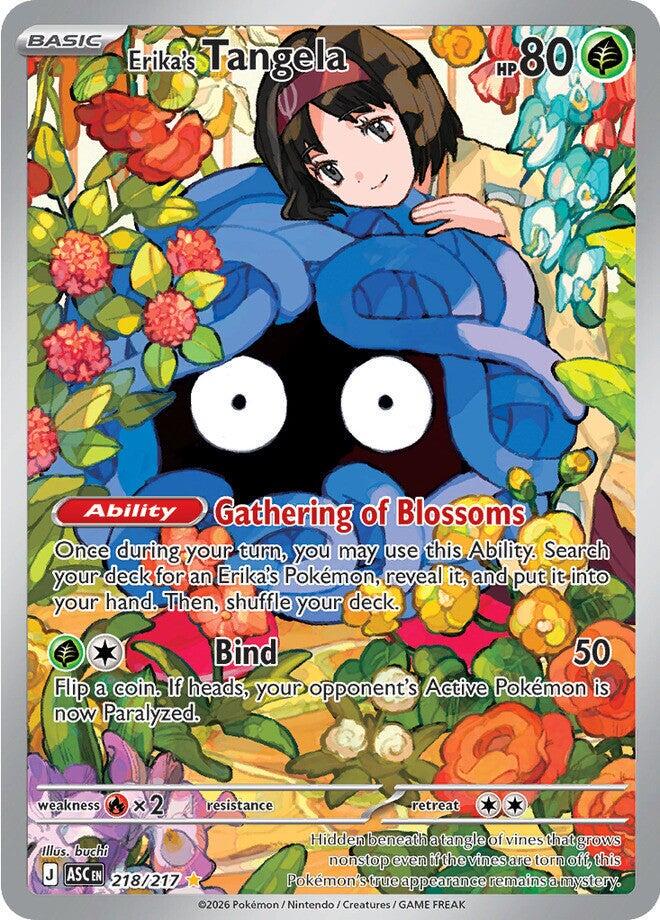
SIR (Special Illustration Rare): 253 pulls → 1 in 82 packs
Gold (Hyper Rare): 23 pulls → 1 in 902 packs
God Packs: 16 pulls → 1 in 1,296 packs

I did not track ex cards at this scale — the dataset would have expanded dramatically and distracted from the main question: how does top-end distribution behave?
I also tracked several specific SIRs — the two biggest chase cards in the set and my own personal chases. Because rarity odds tell you about the set. Specific odds tell you about the experience.
The Specific SIR Math
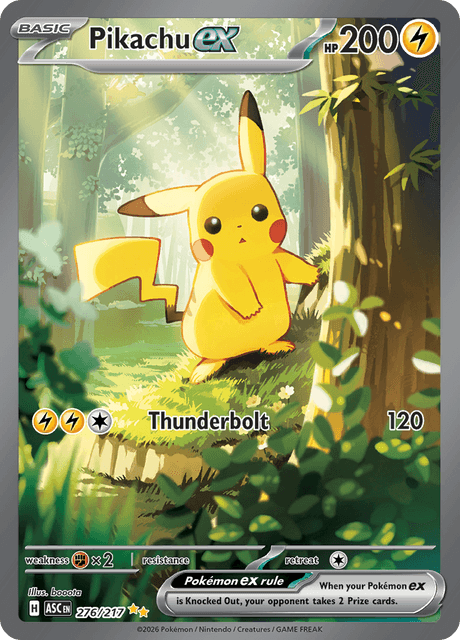
There are 22 SIRs in the set. If they’re equally weighted, each individual SIR has a probability of:
1 / 22
Across 253 total SIR pulls, the expected number of copies per individual SIR is:
253 × (1/22) ≈ 11.5 copies
So if distribution were perfectly even, each SIR would appear about 11–12 times in a 20,740-pack sample. That’s expected value.
And this is critical:
Expected value is a long-run average. It is not a promise about your outcome.
When we say a card appears “1 in 80 packs,” we’re not describing what will happen to you in your next 80 packs. We’re describing what happens when thousands and thousands of packs are opened and averaged together.
Expected value is what emerges across the crowd. It’s not what’s guaranteed to an individual. Think about flipping a coin. A coin is 50/50. Heads or tails.
But if I flip a coin once, I don’t get “half a head.”
If I flip it twice, I might get two heads.
If I flip it five times, I might get five heads in a row.
That doesn’t mean the coin is broken. It means probability does not distribute itself evenly in the short term. Over thousands of flips, the percentage of heads approaches 50%. That’s the law of large numbers at work. The average stabilizes.
But short term? It can look chaotic. Pull rates behave exactly the same way.
A 1-in-80 SIR rate means that if we open tens of thousands of packs, about 1 out of every 80 will contain an SIR.
It does not mean that you will see one every 80 packs.
It does not mean that after 79 dry packs you are “due.”
It does not mean variance takes turns.
Each pack is an independent event. The average exists across the full dataset — not inside your personal streak. And that distinction is where frustration begins. Because most collectors don’t experience “the long run.”
We experience bursts:
- 10 packs
- 36 packs
- 200 packs
- a case
- a vault event
Those are tiny windows into a much larger distribution. And small windows can look wildly unfair. Understanding expected value doesn’t remove the sting of a cold streak.
But it explains it.
My Chase Results
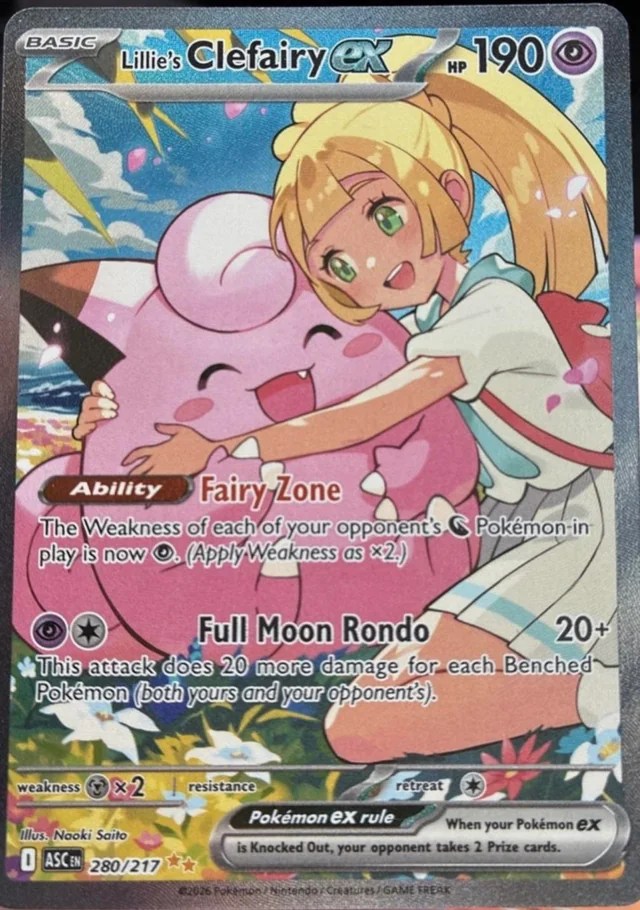
Here’s how the tracked SIRs landed:
Gengar: 5
Dragonite: 5
Lillie’s Clefairy: 10
Forestchu: 9
Rainbowchu: 12
Expected: ~11–12
Two ran cold. One ran slightly hot. Two were near expectation.
Does that prove short printing?
Maybe. But statistically? Probably not. With only 253 SIR events across 22 outcomes, this level of variation is expected. Randomness clusters. Humans expect smoother distributions than reality produces.
So, How Rare Is “Running Cold”?
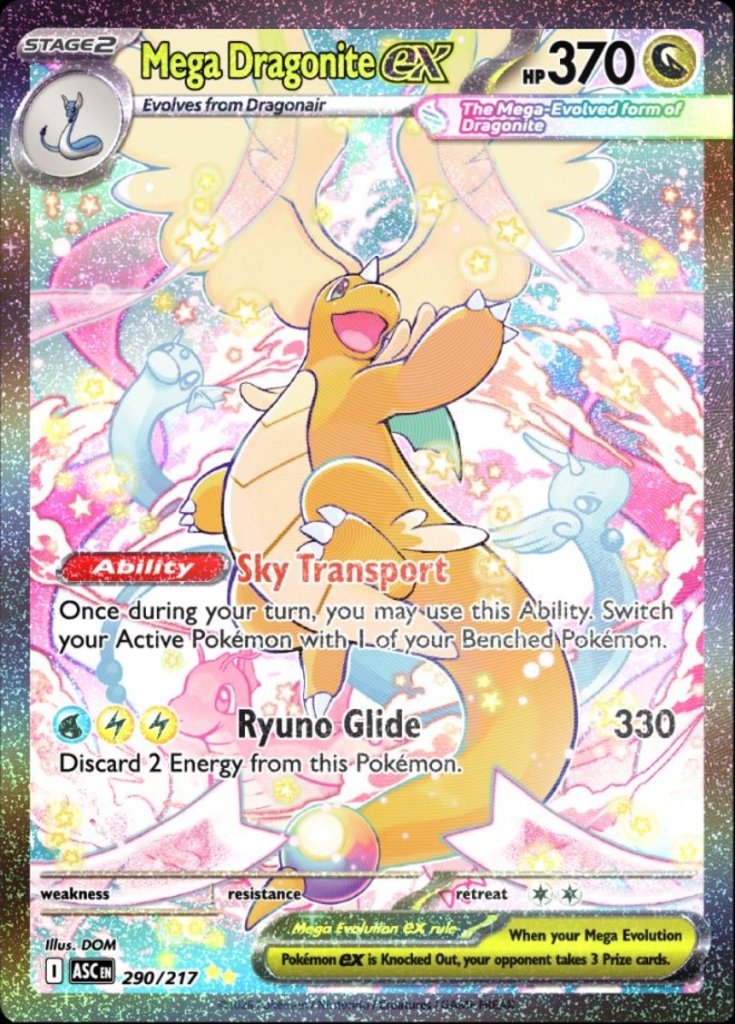
Two of the tracked SIRs (Gengar and Dragonite) appeared only 5 times.
That looks alarming compared to an expectation of ~11.5.
Statistically, we can model this as a binomial distribution:
X ~ Binomial(n = 253, p = 1/22)
The standard deviation for one SIR count is roughly 3 copies.
Five copies is about 2 standard deviations below expectation.
For one specific named SIR, the probability of observing 5 or fewer copies is approximately:
2.5% (about 1 in 40).
That sounds dramatic. But here’s the part most people miss:
There are 22 SIRs.
When you spread 253 pulls across 22 categories, the probability that at least one SIR ends up at 5 or fewer copies is about 45%. Nearly a coin flip.
So while 5 copies looks suspicious for one named card, it is completely normal across 22 categories. This is what randomness looks like when divided across many outcomes.
A Real-World Example: Wenzel’s Gengar Chase
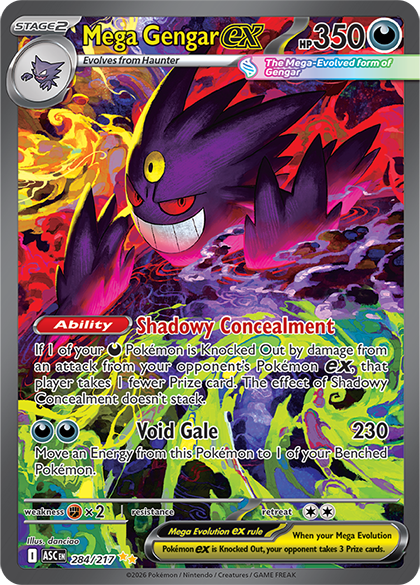
Wenzel TCG ran a “vault” event built around a single card: the SIR Gengar.
If you’ve never seen a vault event before, here’s how it works.
During a rip-and-ship stream, a portion of every order doesn’t get opened immediately. Instead, those packs are set aside into a growing pool of unopened packs — the vault. With every purchase, the vault gets larger.
Before the stream begins, one specific chase card is chosen. The moment that exact card is pulled, whoever hits it wins every pack sitting in the vault.
It’s a layered probability system. You’re not just opening packs. You’re opening packs that might unlock an entire secondary jackpot. In this particular event, one out of every five packs purchased went into the vault.
And the key — the unlock condition — was the SIR Gengar. Which meant every pack opened carried two kinds of tension:
Was there a hit inside?
And was it the hit?
Over time, the vault grows. The pressure builds. The audience watches the number climb. Every near miss feels heavier than the last. Because the entire event hinges on one outcome. One card. And that’s when probability stops being abstract.
It becomes visible.
It becomes emotional.
It becomes expensive.
He opened:
9,370 packs
6 Gold cards
3 God packs – which did not have an SIR Gengar
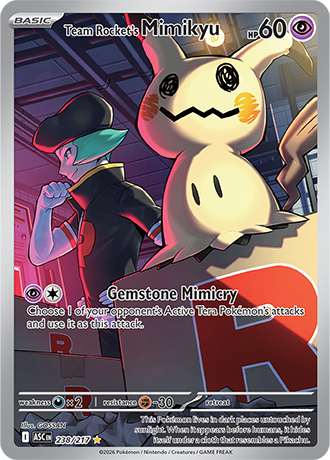
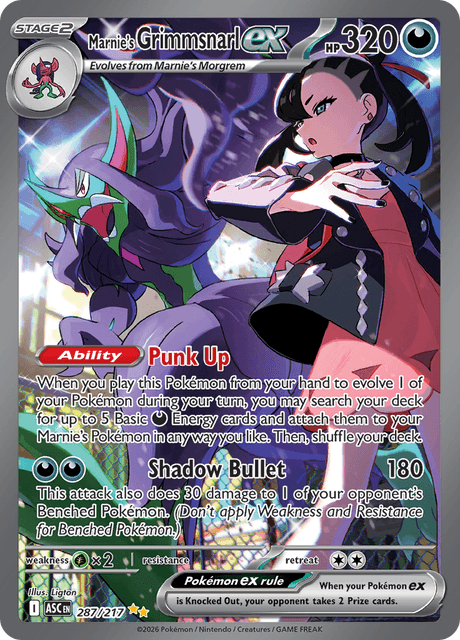
Around 7 Marnie SIRs
Before finally hitting Gengar. He beat 1-in-1,500 odds multiple times. But not the one he wanted. Variance will give you miracles before it gives you your chase. The odds weren’t wrong. They just weren’t personal.
What About Completing a Master Set?
Now let’s zoom out.
If your goal is a full master set, here’s what the math looks like.
Expected packs needed per rarity:
MAR Set (7 cards)
~615 packs
$12,302 CAD @ $20/pack
$4,921 CAD @ $8/pack
UR Set (14 cards)
~873 packs
$17,451 CAD @ $20
$6,981 CAD @ $8
IR Set (33 cards)
~1,443 packs
$28,850 CAD @ $20
$11,540 CAD @ $8
Gold Set (2 cards)
~2,705 packs
$54,104 CAD @ $20
$21,642 CAD @ $8
SIR Set (22 cards)
~6,656 packs
$133,126 CAD @ $20
$53,250 CAD @ $8
In practice, the SIR set dominates the math. By the time you finish SIRs, you will almost certainly have completed MAR, UR, IR, and likely the golds.
Expected total packs to complete everything:
~6,656 packs
$133,126 CAD @ $20
$53,250 CAD @ $8
These are expected averages. Not guarantees. Master sets are a duplicates game. And duplicates get brutal near the end.
What This Means for Collecting
So what did 20,740 packs teach me? The odds don’t care what you want. When it says 1 in 1,500 on a spreadsheet, it does not mean your 1,500. If your goal is efficiency, buying a specific SIR through packs is statistically the most expensive way to get it.
That doesn’t make packs wrong. It means you’re not buying a card. You’re buying an experience.
Buying singles is precision.
Opening packs is entertainment with probability attached.
If your goal is a master set, the more specific your goal becomes, the more variance works against you.
And if you’re chasing one card? That’s where variance hurts most. Because when you care about one outcome, every other hit feels like a miss.
Final Thought
After 20,000 packs, I trust the math. But I respect the variance. The pull rates are real. They just aren’t promises. And understanding the odds doesn’t remove the emotion. It just explains it.
Set budgets, pack limits and buy singles.



 Pixels and cocoa
Leave a comment