
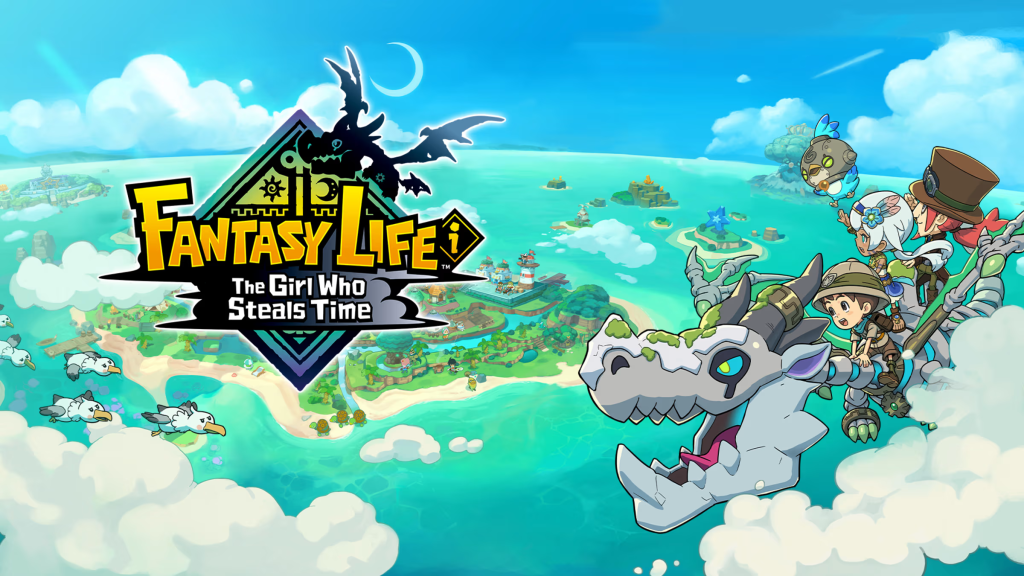
Hours Played: 40
Platform: Steam Deck and PC
As someone who’s not exactly a pro at video games—trust me, the moment I have to name my character on stream, my brain short-circuits and I’m suddenly convinced “Player 1” is a perfectly fine name—I went into Fantasy Life i: The Girl Who Steals Time with a healthy dose of skepticism. Would it be too much? Too repetitive? Too overwhelming for my anxious little gamer heart?
Surprisingly, it’s turned out to be an absolutely delightful romp—equal parts cozy and chaotic. Sure, there are times when it feels like there’s so much to do I might as well write a thesis about it, but that’s part of the charm. It’s like the game gives you a buffet of fun, and you can take a little bit of everything or gorge yourself on just one favourite dish.
So, grab your map (thank goodness it’s actually helpful), buckle up, and join me for a skeptical but loving stroll through this quirky, colourful world. Let’s dig in!
Accessibility
First off, bless this game for its map-as-a-guide feature! For those of us who spend more time lost than questing—guilty as charged—it’s a game-changer. It turns the overwhelming sprawl of the world into a cozy, navigable adventure. Combat? Not hard at all—especially since you can overlevel like a boss (or a nervous beginner with fancy Deluxe Edition weapons, like me).
What really matters here is the game’s gentle approach to tutorials and repetition. The tutorials are optional, so if you love mastering every tiny system, you’re well-fed with those adorable life lessons. But if you’re more in the “I’m already overwhelmed, please just let me play” camp, you can skip them entirely. This choice—this respect for different learning styles and comfort levels—makes all the difference, especially for people like me who are neurodivergent.

Navigating games can feel daunting when you’re neurodivergent—like you’re constantly playing catch-up in a world designed for brains that work a bit differently. Fantasy Life i’s flexibility—letting you go at your own pace, skip what you need to, and embrace what excites you—feels like a warm hug of accessibility.
And one tiny but powerful feature that soothed my anxious mind? The default name for your character. Naming things might sound trivial, but for those of us who get immediately panicked by decision overload (especially live on stream!), it’s a genuine relief. It’s a small detail, but it’s the kind of kindness in design that says, “Hey, it’s okay—you don’t have to have it all figured out right now.”
For all these reasons, Fantasy Life i stands out as a game that doesn’t just include players like me—it genuinely welcomes us.
Character Creation
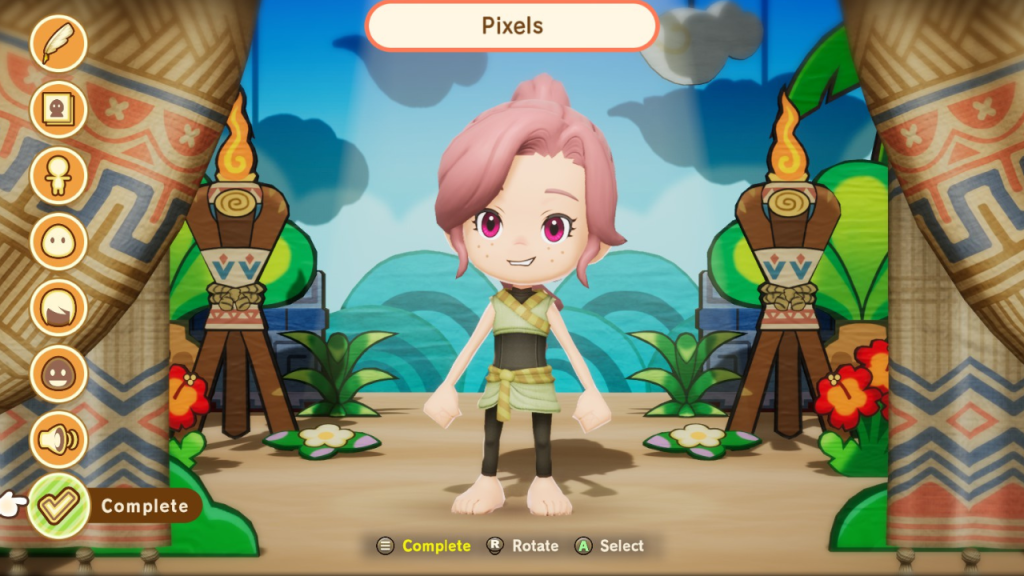
This game lets you craft a super-cute avatar—tall, short, boy, girl, or otherwise—and can I just say? My little pink-haired adventurer is absolutely adorable. Just look at those bright pink eyes and those determined cheeks! She’s giving major “ready for adventure, but still gonna stop and smell the flowers” vibes.
For anyone who, like me, can spend hours tweaking every tiny detail, Fantasy Life i delivers a joyful playground. From hair color to eye shape, the game lets you create a character that truly feels like yours. Or, if you’re in more of a hurry, you can grab one of the pre-made options and jump straight in—no pressure, no fuss.
However, the system isn’t perfect. There’s no option for a bigger-bodied character, which has sparked more than a few Reddit threads (and some justified frustration). In a game that’s all about living your fantasy life, it would be nice to see all body types included—because, let’s be real, fantasy adventures are for everyone, not just the same cookie-cutter shapes.
And while we’re at it, let’s talk about the voices. Out of 12, only 2 are feminine. For a game with so much choice elsewhere, it’s a bit of a head-scratcher that the vocal options feel so limited.
Still, there’s something wonderfully comforting about seeing your own little creation—like my sweet pink-haired explorer—ready to take on the world. It’s a small thing, but when the game lets you start your adventure with a character who looks (and feels) just right, it’s the perfect beginning to your fantasy life.
Gameplay

Fantasy Life i is basically Animal Crossing meets Zelda in a fantasy fever dream. After 40 hours, I’ve unlocked areas like Basecamp (where you can build homes and customize like a mad interior designer), Ginormosia (the desert area with enemies, mounts, and strangelings— of which there are 49!), the Depths (story-heavy with mining spots), and Eternia Village (the charming starter hub for your new lives).
Basecamp’s your Animal Crossing playground: buy farms, build houses, and decorate to your heart’s content. There’s even a nifty terraform system that’s far easier than Animal Crossing’s island sculpting nightmares.
Ginormosia is where the real action starts. You’ll meet new enemies, snag mounts, and find some of those strangelings to fill your village (and your heart).
Crafting – A Whimsical Test of Reflexes
Crafting in Fantasy Life i isn’t just a background task—it’s an engaging, interactive experience that brings to mind the lively mini-games of Mario Party. Each crafting session transforms into a mini-game where timing, precision, and quick reflexes are key. Whether you’re forging a sword, sewing a garment, or concocting a potion, you’re prompted to press specific buttons in rhythm, much like the rapid-fire challenges found in Mario Party titles.
This resemblance isn’t coincidental. Mario Party is renowned for its mini-games that test players’ abilities to quickly and accurately press buttons, often under time pressure. For instance, in the “Button Mashers” mini-game from Mario Party 5, players must rapidly press a sequence of buttons to succeed. Similarly, Fantasy Life i‘s crafting requires players to respond swiftly to on-screen prompts, making each crafting session feel like a mini-game challenge.
Once you’ve successfully crafted an item, the game graciously allows you to “autocraft” it in the future, sparing you the repetitive button-mashing and letting you focus on other adventures. This feature is a thoughtful nod to accessibility, recognizing that not all players may enjoy or be able to perform rapid button presses repeatedly.
In essence, the crafting system in Fantasy Life i adds a layer of interactivity that keeps the gameplay fresh and engaging. It transforms routine tasks into fun challenges, much like the beloved mini-games of Mario Party, ensuring that every aspect of the game contributes to an enjoyable experience.
Skillboard – A Satisfying Path to Progress
Leveling up in Fantasy Life i is delightfully straightforward, and honestly? A breath of fresh air for anyone who’s ever been lost in the meandering menus of other RPGs. Here, you simply do stuff—mine a rock, fish up a trout, smack a monster with a stick—and you’re rewarded with experience points that fuel your growth.
These points go straight to your skillboard, a refreshingly intuitive system where you “purchase” new abilities and upgrades tailored to each of your lives. Want to hit harder as a mercenary? No sweat—drop those points into attack power. Looking to reel in bigger fish? There’s a skill for that. It’s all laid out in a clean, no-nonsense grid, so even if skill trees usually make your head spin (like they do for me), this one’s as easy as pie.
What’s really satisfying is how the skillboard lets you feel a tangible sense of progress—no mystery stat increases or head-scratching “what does this even do” skills. Plus, since you earn experience for literally everything you do, there’s this constant sense of forward motion—no grindy bottlenecks, just a steady climb towards a stronger, more capable character.
It’s simple. It’s satisfying. It’s the kind of system that makes you think: “Ah, I actually know what I’m doing here!” And that, in a game as broad and busy as Fantasy Life i, is pure gold.
Combat – Choose Your Own Adventure (and Level of Challenge)
The combat system in Fantasy Life i is refreshingly flexible, offering a buffet of options that suit just about any playstyle. Want to dive headfirst into a battle you’re probably too under-leveled for? Go for it! The game won’t stop you. Embrace the dodge-roll life and prove your mettle in a true hard-mode challenge. Or, if you’re more of a cautious combatant (like me), you can wait until you’ve hit the recommended level, or more, and steamroll through enemies with ease.
For those who’d rather skip the early grind altogether, the Deluxe Edition’s weapons are an absolute must. These beefed-up tools give you a head start, letting you wade into combat with confidence (and a bit of swagger). It’s like bringing a bazooka to a snowball fight—satisfying and a little bit over-the-top.
No matter how you approach it, the game helpfully telegraphs the recommended levels for each encounter. This is a godsend if you’re prone to second-guessing or just want to avoid being repeatedly flattened by the same enemy. But if you’re up for a bit of a thrill, feel free to throw caution to the wind and see how far you can push it.
The combat itself is pretty straightforward—swing, cast, block, dodge, and repeat—yet it’s never mindless. There’s a rhythm to it that makes it feel like a fun puzzle rather than a slog. And because you can switch up your life classes on the fly, there’s always a new style or ability set to experiment with, whether you’re feeling like a nimble hunter one day or a magic-wielding magician the next.
In short? Combat in Fantasy Life i isn’t there to stress you out (unless you’re looking for a challenge). It’s there to give you options: a chance to flex your skills, test your builds, and find the fighting style that feels just right for you.
Lives

One of the biggest charms of Fantasy Life i is its 14 “lives” (or classes), each with its own playstyle, perks, and quirks. Here’s a quick-and-dirty (but still cute) rundown:
Paladin – Your classic sword-and-shield protector. Great for folks who like to tank hits and look heroic.
Mercenary – Ditch the shield, grab a two-handed sword, and go all-out on offense. Feels like a whirlwind of steel.
Hunter – Long-range bow attacks to snipe your way through the world. Ideal if you like to keep enemies at arm’s length.
Magician – Magic missile spammer! Harness elemental spells to blast foes from afar.
Woodcutter – Chop down trees like you’re Paul Bunyan reincarnated. Gather wood for all your crafting needs.
Miner – Dive into the depths, hammer in hand, and bring back shiny rocks to fuel your crafting empire.
Angler – For those who find peace in patience (and fish). Reel in everything from minnows to monsters.
Cook – Whip up delicious dishes that heal, buff, and delight. The only life that can literally taste victory.
Blacksmith – Forge weapons and armor with the sweat of your brow and a hammer that just won’t quit.
Carpenter – Craft furniture, home décor, and everything that turns your humble abode into a masterpiece.
Tailor – Need new threads? Tailors make the world fabulous, one stitch at a time.
Alchemist – Potion-mixing, bomb-crafting alchemical wonder. Basically the local wizard’s best friend.
Farmer (unlocked later) – Cultivate crops and raise critters for a cozy farming vibe… even if the actual farming system is a bit of a letdown here.
Artist (also unlocked later) – Paint the world pretty and turn creativity into rewards. A relaxing, artsy break from combat.
My Faves?
Alchemist, angler, and mercenary—an oddball combo for me! Normally, combat and fishing are on my “nope” list in games, but Fantasy Life i makes them pure, cozy fun. As an alchemist, I get to whip up potions and bombs like a magical chef—there’s something oddly satisfying about turning random ingredients into powerful tools.
The angler life surprised me even more—usually, fishing in games feels like watching paint dry, but here it has a soothing rhythm. The little mini-games and the sense of discovery when you reel in something rare Makes me so happy. Even more weird is that this is the third cozy game in a row where they have made me like fishing. Maybe I am just getting better at games? Either way, I am here for it.
Then there’s the mercenary life, which totally transformed how I see combat. Swinging a giant sword and watching enemies go down? Cathartic in the best way possible. I still don’t love combat-heavy games in general, but here? It’s a treat.
Platform Performance & Recommendations
I played Fantasy Life i on both the Steam Deck and PC, and let me tell you—both versions ran smoother than a fresh jar of peanut butter. No stutters, no hiccups, just that silky-smooth gameplay that makes you forget you’re running around in a world of adorable chaos.
If you’re considering the Switch version, though, it’s worth taking a little pause. The Switch’s hardware can sometimes feel like it’s gasping for breath in bigger games, so I highly recommend checking out reviews from folks like Miss Bubbles, Josh’s Gaming Garden, and SwitchUp. They do a fantastic job of breaking down exactly how this game fares on Nintendo’s plucky little console, so you don’t end up with buyer’s remorse (or a Switch that sounds like it’s about to lift off).
As for me? I’m keeping my eyes peeled for the Switch 2 upgrade version (confirmed to be coming but no release date). The prospect of cozy fantasy adventures in handheld mode is too good to pass up—especially when the next-gen hardware might finally give us that flawless performance across the board. Stay tuned for that review—because you know I’ll be diving back in faster than a woodcutter with a brand new axe.
The Not-So-Great Bits
Even the coziest fantasy life can have a few lumps in the mashed potatoes. First off, the camera angles can be downright disorienting. One minute you’re trotting along a peaceful path, and the next it feels like you’re on a pirate ship in a hurricane—spinning, swaying, and occasionally making you wonder if Dramamine should be on your gaming desk. It’s not a dealbreaker, but it’s definitely a little jarring when you’re just trying to find your way to the next cozy crafting quest.
Then there’s the farming. Oh, the farming. As someone who usually lives for tilling soil and planting seeds, I was a bit let down by the system here. Instead of a satisfying Stardew Valley-style romp in the dirt, you’re forced to buy farm plots and plop them down like modular Lego bricks. No tilling, no sense of connection to your little patch of earth—just a quick placement and off you go. It’s fine, but it’s missing that tactile magic that makes farming so rewarding in other cozy games. You can still sow your seeds, which is fine. You also have to water your crops, but it’s a bit awkward in the mechanics.
And let’s talk about save files—or rather, the complete lack of them. You get one. A single, solitary save file. For players like me who love to experiment, try new lives, or see how different choices pan out, this is a major thorn in an otherwise rosy garden. It’s the kind of limitation that makes you a little more cautious with your decisions—and not always in a fun way.
Finally, there’s this feeling that the whole game is just one big, never-ending tutorial. Every new mechanic comes with a helpful pop-up and a well-meaning explanation. While I appreciate the guidance (and the fact that you can skip most of it if you’d rather figure things out yourself), it can start to feel a bit like a well-meaning but overly talkative friend who just wants to help. If you’re into cozy, low-pressure games, this might be right up your alley. But if you’re looking for a game that lets you jump in and just figure things out naturally? You might find yourself wishing for a little less hand-holding.
Price & Final Thoughts
$80 CAD (or $90 for the Deluxe Edition) is a hefty price tag—no way around it. But here’s the thing: if you’re the type to sink 100+ hours into decorating, crafting, and wrangling strangelings like I am, it’s absolutely worth it. Even if you’re just here for the story, you’ll still get a solid 20-25 hours of charming, cozy gameplay. There’s something comforting about knowing there’s always more to do once the credits roll: 20 Ginormosia shrines to conquer, 49 strangelings to recruit, a mountain of life challenges to tackle, and enough bosses to keep even the most combat-averse player feeling just a little bit brave.
For me this has fully become my cozy game of the year—sorry, Dinkum! I mean, I put in 120 hours in Dinkum in just one month. So if Fantasy Life i gets even half that attention from me, it’s a clear winner in my book.
So, should you buy it? If you adore cozy games that let you pick your own pace—whether you want to spend an hour fishing or a day perfecting your island’s layout—it’s a heartfelt yes. If you’re easily overwhelmed by menus and tutorials, or you’d rather not pay full price for a game that can feel a bit hand-holdy, maybe wait for a sale.
But for those of us ready to spend 200 hours customizing every inch of our island, mastering all the lives, and making every little corner of this fantasy world our own? Fantasy Life i: The Girl Who Steals Time is a charming, if slightly flawed, escape worth every single moment. So go ahead—grab your map, name your character (or let the game do it for you), and steal a little time for yourself.
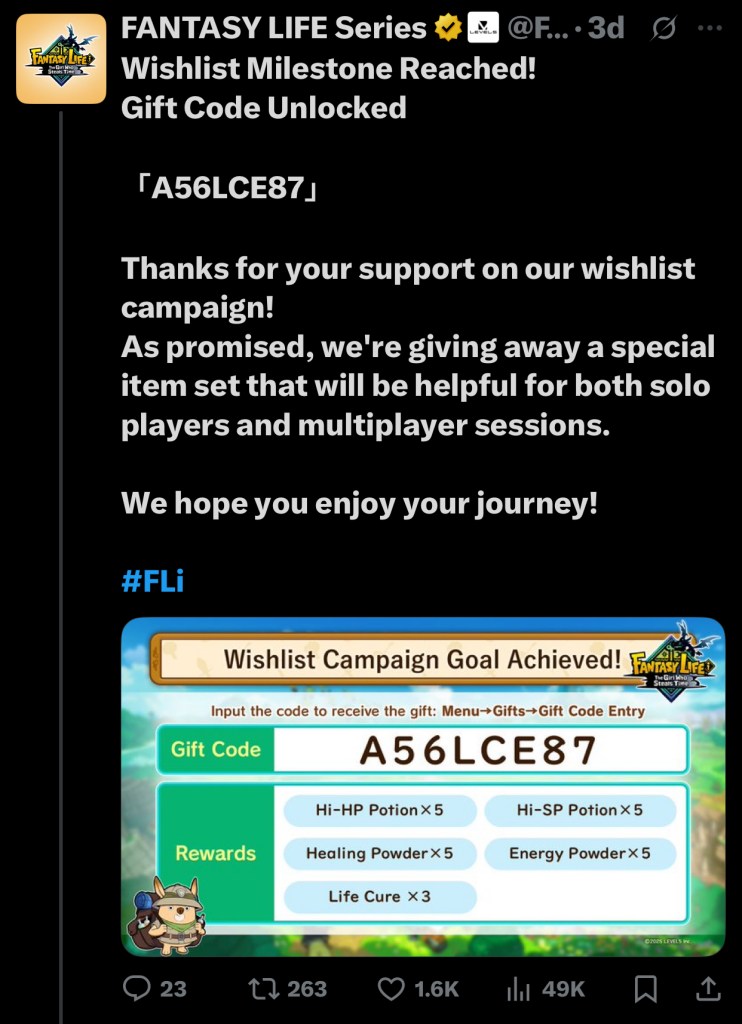
Update May 27: Nintendo Switch 2 upgrade to this game will be available on June 5
If you already have the game be sure you claim the following codes from level 5!


Consider supporting me through Tips or Patreon. Your support on Patreon or through tips makes a huge difference for us! By becoming a patron, you’re not just supporting the show—you’re joining our community. Patreon contributions help cover production costs, equipment upgrades, and even lets us spend more time researching and bringing you the quality content you love. Tips through Squarespace is another awesome way to show your appreciation and help us with day-to-day expenses.


 Pixels and cocoa
Leave a comment